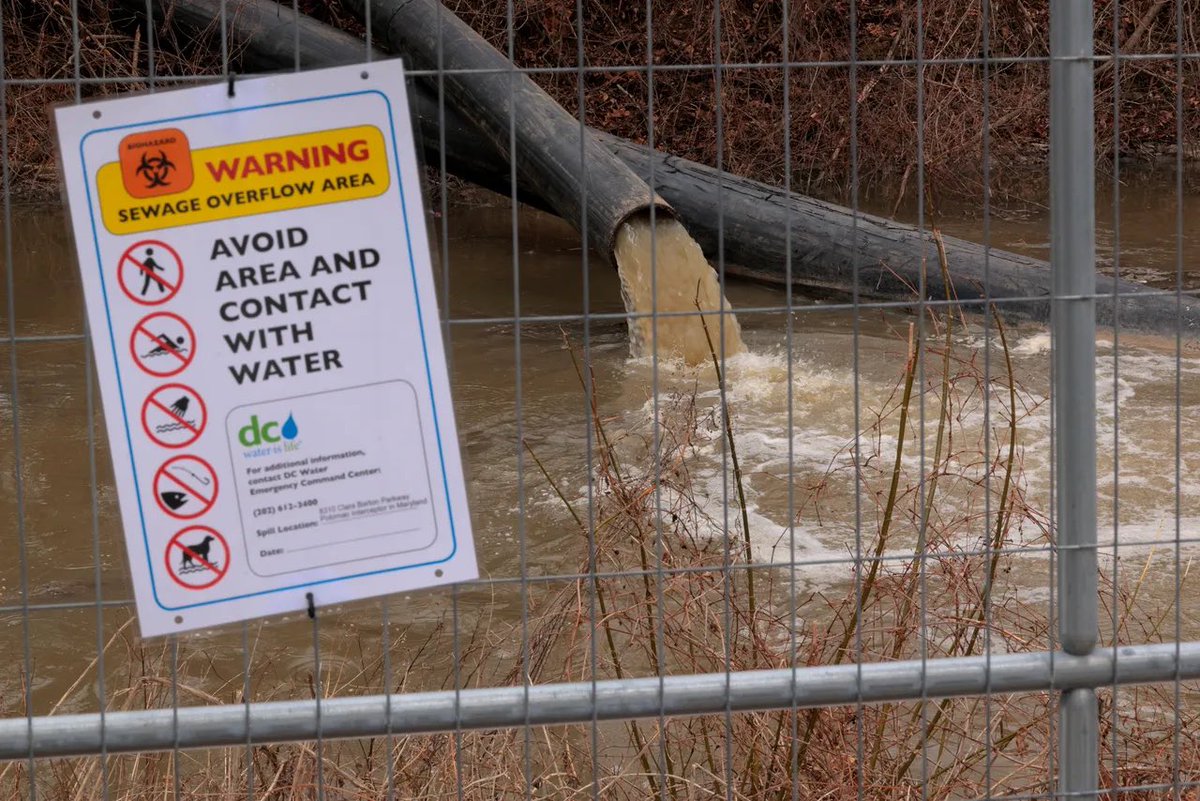
The catastrophic collapse of a major sewer line under Democrat-controlled oversight in the D.C. area has unleashed hundreds of millions of gallons of raw sewage into the Potomac River, exposing the perils of prioritizing political ideology over practical expertise and infrastructure maintenance.
The Epic Spill: A Filthy Symbol of Neglect
In January 2026, a 72-inch Potomac Interceptor pipeline—dating back to the 1960s—burst near Clara Barton Parkway in Montgomery County, Maryland. This failure dumped an estimated 243 million gallons of untreated wastewater into the river, with environmental watchdogs claiming totals nearing 300 million, potentially the largest sewage spill in U.S. history. The initial gush of 194 million gallons overwhelmed emergency pumps, clogged by improper waste like flushed wipes. High E. coli levels have rendered the river hazardous, threatening ecosystems, wildlife, and public health. Critics, including President Trump, have blasted this as “gross mismanagement by local Democrat leaders,” pointing to chronic underfunding and delayed upgrades in a system long overdue for rehabilitation.
The aging of DC Water’s pipes, like the 1960s-era Potomac Interceptor, stems from several interconnected factors. Primarily, chronic underinvestment plagues U.S. infrastructure, with the American Society of Civil Engineers rating wastewater systems a D+ nationally—requiring trillions in funding that’s often deprioritized amid budget constraints.
In D.C., competing fiscal demands (e.g., social programs, education) divert resources from capital projects, despite DC Water’s $625 million 10-year rehabilitation plan. Logistical hurdles, including permitting in environmentally sensitive areas and disruption to urban life, delay upgrades. High costs—billions for full modernization—exacerbate inaction, leading to reactive maintenance post-failures like the January 2026 collapse. While political critiques often target local Democratic leadership for mismanagement, this “wait until something bad happens and then do something” attitude highlight a bipartisan failure to address post-WWII infrastructure decay through sustained federal and local investment.
DEI Over Drive: Sacrificing Merit for Mandates
DEI: DC Water dumped 240M gallons of sewage into the Potomac in one month. After 2 years purging white staff to meet diversity goals, DC Water Manager David Gadis celebrated that there he had ousted every experienced white executive based on the color of their skin. Today DC… pic.twitter.com/mXksv0aJYH
— @amuse (@amuse) February 18, 2026
At the helm is DC Water CEO David L. Gadis, whose tenure has funneled $520 million into DEI-focused contracts with minority- and women-owned firms. (He was cited in a lawsuit over alleged withholding of lead info during the Flint water crisis.) Appointed as the utility’s first Black CEO in 2018, Gadis overhauled the leadership to ditch the “all white males” at the top, aligning with a workforce that’s 75% people of color.
Here is the board and the leadership team of DC Water:https://t.co/RrR80i8Zdxhttps://t.co/dTrnp5LNwZ pic.twitter.com/zpebz1cX7B
— 🇺🇸 Mike Davis 🇺🇸 (@mrddmia) February 18, 2026
While touted as equity wins, this shift has been lambasted for sidelining seasoned experts in favor of demographic checkboxes. Trump and Republicans decry it as the “Democrat War on Merit,” linking it to similar fiascos like California’s wildfires. Gadis’s past role in Flint’s water crisis adds fuel, raising doubts about competence in crisis management. In Democrat-run jurisdictions, DEI initiatives are accused of bloating costs and eroding institutional knowledge, turning vital utilities into ideological experiments.
Waste and Woke Governance Gone Wild
Board Chair Unique Morris-Hughes* embodies the excess, with prior scandals involving $69,000 in improper spending on lavish staff events complete with go-go bands, DJs, and acrobats—flouting regulations. Untracked Las Vegas vouchers from vendors hint at deeper ethical lapses. Broader D.C. government woes, from lead contamination cover-ups to worker corruption, persist under Democrat dominance. Trump’s intervention via federal agencies underscores local failures, with calls for meritocracy over mandated diversity.
The Chairwoman of the @dcwater board is Unique Morris-Hughes. She’s overseeing the biggest sewage spill in US history
— NOVA Campaigns (@NoVA_Campaigns) February 18, 2026
She has no engineering or infrastructure background. She’s a DEI bureaucrat & former teacher. Her day job? DC’s Secretary of Labor
She makes $231,631 per year https://t.co/3ZMbCNzBay pic.twitter.com/ZS6fqtUJDD
The Toxic Legacy of Progressive Priorities
This DEI-driven debacle in the nation’s capital illustrates how Democrat policies sacrifice expertise for social engineering, imperiling public safety and the environment. As sewage poisons the Potomac, it’s a stark reminder: when “wokeness” trumps wisdom, communities pay the price in pollution and peril. Real reform demands ditching the sh*t show for sound stewardship.
Senator up for reelection looking desperate
I’m deeply disturbed by the sewage leak impacting the Potomac, but Virginians can be assured that their drinking water is not impacted by the leak.
— Mark Warner (@MarkWarner) February 18, 2026
We’ve made huge strides cleaning up this river, and this is a devastating step back that could impact so many small businesses and…
*Unique Morris-Hughes: DC Water Board Chair Amid Scrutiny
Unique Morris-Hughes (full name Dr. Unique N. Morris-Hughes) currently serves as the Board Chair of DC Water, having been sworn in on January 14, 2025, as the first woman to hold the permanent chair position. Appointed by Mayor Muriel Bowser and confirmed by the DC Council, she oversees the utility’s governance while simultaneously directing the District of Columbia Department of Employment Services (DOES), where she acts as Secretary of Labor managing over $1.2 billion in funds for workforce development, unemployment insurance, paid leave, and labor standards.
Background and Career Trajectory
Morris-Hughes holds a PhD from the University of Maryland Eastern Shore, an MBA from Trinity Washington University, and a BA in English from Johnson C. Smith University. Her career emphasizes public service and workforce turnaround efforts. She previously served as Chief Strategy Officer at DOES, where she was credited with revitalizing federally funded programs. Earlier roles included positions at the Office of the State Superintendent of Education (OSSE), such as Chief Operating Officer overseeing massive grant portfolios and acting Assistant Superintendent for Wellness and Nutrition. Her ascent reflects strong ties to Democratic leadership in D.C., including appointments under Mayor Bowser.
Recent Controversies and IG Findings
Morris-Hughes faced significant criticism from a December 2025 D.C. Office of the Inspector General (OIG) report stemming from her time at DOES. The probe, triggered by media reporting, concluded she violated spending regulations by approving $69,000 in questionable expenses for all-staff “professional development” events in 2022 and 2023. These included catering, go-go bands, DJs, emcees, motivational speakers, and acrobats—items generally prohibited without waivers under D.C. rules on food and entertainment. Total event costs reached hundreds of thousands, raising concerns about fiscal responsibility with public funds. Additionally, donated Las Vegas hotel stay certificates (including one raffled at a 2023 event) were improperly tracked or unaccounted for, prompting ethics questions. A supervisory contract specialist was also cited for improper approvals.While no criminal charges resulted, the findings fueled perceptions of wastefulness in Democrat-led agencies. Other OIG audits during her DOES tenure critiqued unemployment claims processing delays during the pandemic and vendor oversight issues, though she defended improvements to systems and fraud prevention.Relevance to DC Water and Broader CritiqueAs Board Chair during the January 2026 Potomac Interceptor collapse and massive sewage spill, Morris-Hughes oversees strategic direction amid infrastructure failures blamed on neglect. Critics tie her appointment and past spending lapses to a pattern of prioritizing optics and events over rigorous stewardship—exemplifying how political appointments in D.C. can sideline merit in favor of connected figures. Her dual high-profile roles amplify concerns that governance suffers when leadership focuses on representation and morale-boosting extravagance rather than preventing crises like the recent environmental disaster.In the context of DC Water’s challenges, Morris-Hughes symbolizes the intersection of progressive priorities and accountability shortfalls, contributing to distrust in local utility management.